
Orbital AI Datacenters: Potential, Challenges, and Future of Space Compute
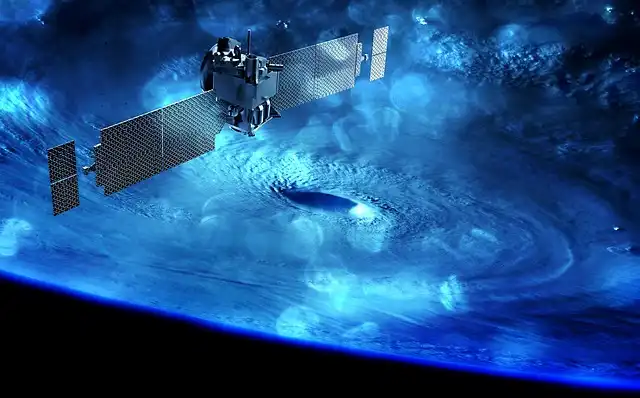
Space-based AI compute offers solutions for Earth datacenters and aids space exploration. Yet, it faces challenges including power, cooling, debris, regulation, and high costs. It's practical for specialized, distributed workloads, complementing ground systems rather than replacing them.
Space-based AI compute has actually been positioned by the technology industry as an option to several difficulties dealing with current Earth-based datacenter facilities, consisting of power supply, cooling, and water. Is the modern technology as obtainable and possible as it’s proclaimed to be?
The innovation additionally holds prospective for advancing humanity’s space exploration ambitions, according to McDevitt, as the framework might assist spacecraft with onboard autonomous procedures, navigation assistance, and a lot more.
Initial Concerns & Regulatory Challenges
McDevitt did have some interest in the technology industry’s AI push and orbital datacenters. He was worried about the “focus of power” and “regulative evasion” that might arise from the facilities. He likewise shared that “cybersecurity, dual-use military applications,” as well as “governance spaces” over the control and ownership of compute framework, “past national boundaries,” were additionally concerning.
The possible particles triggered by the datacenters, McDevitt shared, was likewise create for worry. Cooling is another issue that McDevitt sees presenting an obstacle for orbital datacenters. To scale orbital AI datacenters, the technology industry still encounters several challenges, both highly and economically. McDevitt did have some concerns with the tech market’s AI press and orbital datacenters.
Targeted Use Cases & Feasibility
“Today, the toughest situation is for targeted, modular releases rather than giant clouds in space,” he stated. McDevitt also shared that the promise of orbital datacenters was attractive due to the fact that Earth-based AI infrastructure is facing bottlenecks like “lengthy power interconnection lines up, cooling down and water restrictions, allowing hold-ups, etc”.
“For expedition objectives, near-local or regional calculate would potentially lower the requirement to send every raw dataset back to Planet and could speed up choices in bandwidth-constrained atmospheres,” he shared.
McDevitt, broadening on the expediency of datacenters with our existing financial and technological advancements, shared that orbital datacenters were practical in “a limited feeling,” adding that the existing levels recommend it can accomplish “specialized workloads,” yet weren’t yet at “hyperscale or at an expense” that might make a satellite collection replace terrestrial datacenters.
Specialized Applications & System Lifespan
As physical AI and freedom initiatives are increase, McDevitt shared that he did see possibility for orbital datacenters to work as an expansion of ground-based systems on Earth to operate independent technology and physical AI. “The very best use situation is likely a distributed design,” he stated, including that orbital AI calculate “will more than likely be a complement to Earth-based facilities.”.
The system additionally has its best application in the areas of “Planet observation handling, RF signal analysis, spacecraft telemetry, in-orbit side reasoning,” and so on, as these procedures were “space-native,” he claimed. He warned that “very early [ orbital datacenter] systems would have a shorter valuable economic life,” of someplace in between 5-7 years, adding that commercial systems were still a number of years away.
Overcoming Technical & Economic Hurdles
The potential debris brought on by the datacenters, McDevitt shared, was additionally cause for issue. “If the market starts discussing countless orbital compute properties, particles management moves from a side issue to a core style and regulatory requirement,” he claimed. McDevitt likewise shared that the satellites can increase crash risk unless there was “solid particles mitigation.”.
Cooling is one more issue that McDevitt sees positioning a difficulty for orbital datacenters. “In orbit, you do not amazing by convection or dissipation,” he said, which, while getting rid of the demand for water, converts to thermal design taking spotlight. “Warmth spreading, radiators, conventional power density, and workload scheduling” were all important facets, he claimed.
To scale orbital AI datacenters, the tech sector still deals with a number of obstacles, both technologically and financially. “Thermal monitoring, launch economics, radiation tolerance, networking, maintenance, and refresh cycles,” were all significant obstacles along the road, McDevitt said. Developing a “trusted, upgradeable, financially affordable compute system at scale,” also stays a headwind.
1 Distributed Computing2 Orbital Datacenters
3 Space Debris
4 Space Exploration
5 Space-based AI
6 Thermal Management
« Sarah Huckabee Sanders Asked to Leave Little Rock Restaurant Amid ControversyIran Warns of Regional Conflict Amid US Threats to Energy Facilities & Strait of Hormuz »